
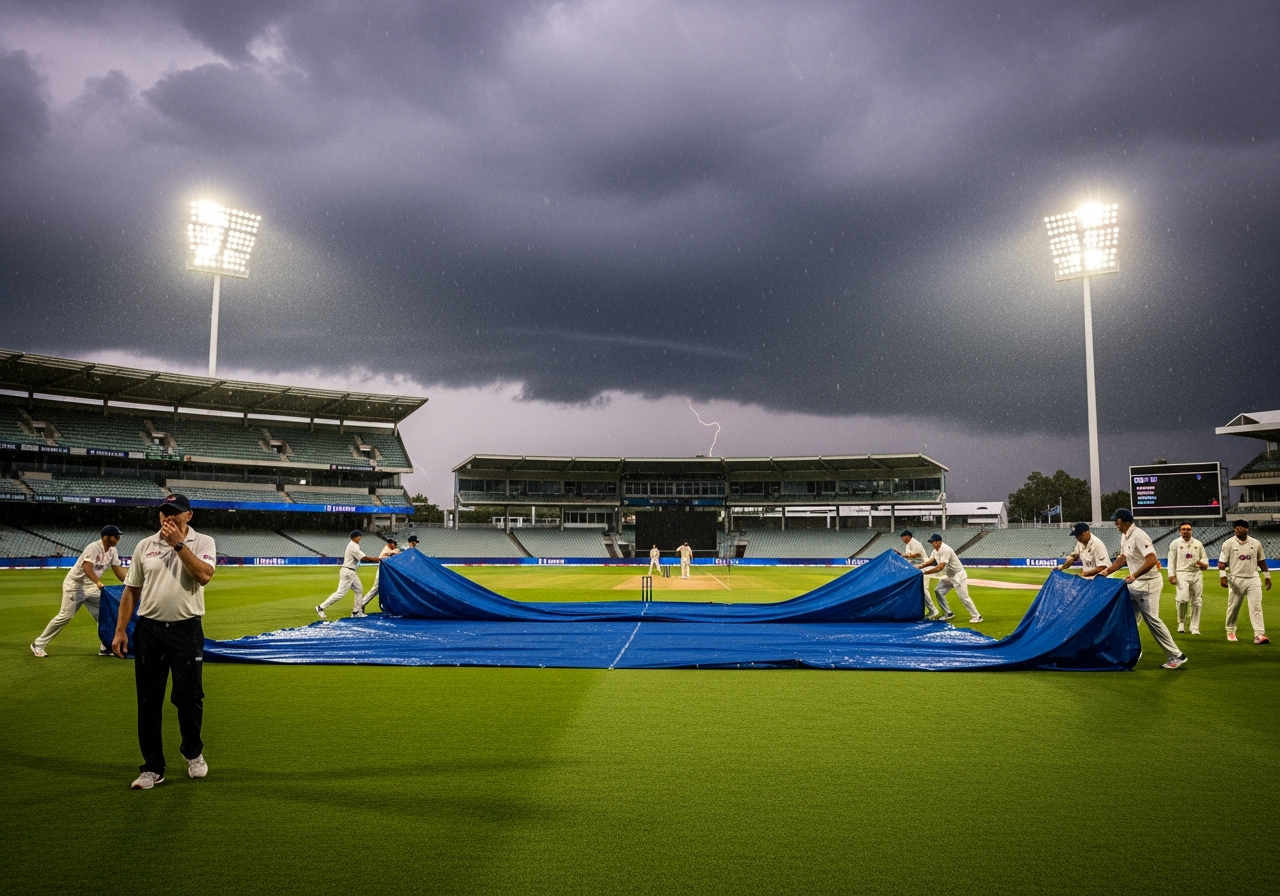
The monsoon season transforms Indian cricket betting into a high-stakes weather prediction game. With the southwest monsoon typically affecting matches from June through September, IPL and international cricket bettors face unique challenges that don’t exist in other cricket-playing nations. Rain delays trigger the complex Duckworth-Lewis-Stern (DLS) method, fundamentally altering bet outcomes and creating settlement scenarios that can confuse even experienced punters.
Understanding how Indian bookmakers handle rain-affected matches becomes crucial during monsoon season, when up to 15% of IPL matches face weather interruptions. Unlike global cricket betting markets, Indian operators must navigate BCCI-specific timing rules, venue-particular drainage capabilities, and the rapid weather changes characteristic of subcontinental monsoons that can turn a straightforward match bet into a complex settlement puzzle.
Understanding Monsoon Impact on Indian Cricket Matches
India’s monsoon season runs from June to September, coinciding with portions of the IPL and most international cricket tournaments. During this period, weather-related delays affect approximately 12-15% of scheduled matches, with the frequency varying significantly by region. The southwest monsoon brings intense but often brief downpours that can halt play for anywhere from 30 minutes to several hours.
Historical data shows that venues in eastern and western India experience the highest frequency of rain delays, with cities like Kolkata and Mumbai recording delay rates nearly double the national average. The unpredictable nature of monsoon weather creates unique betting dynamics, as matches that seem destined for normal completion can suddenly shift to DLS scenarios. This volatility has led to specialized rain delay betting markets and increased scrutiny of settlement rules among Indian bettors.
Key Monsoon Hotspots for Delays
Certain venues across India have developed reputations as rain delay hotspots during monsoon season, requiring special consideration for cricket bettors.
- Eden Gardens, Kolkata: Records the highest rain delay frequency in IPL history, with drainage issues compounding monsoon challenges
- Wankhede Stadium, Mumbai: Experiences sudden onset rain delays due to coastal weather patterns and sea breeze interactions
- Arun Jaitley Stadium, Delhi: Faces monsoon delays typically lasting 2-3 hours when they occur, significantly impacting match completion
- M.A. Chidambaram Stadium, Chennai: Northeast monsoon affects late-season IPL matches, with historically poor drainage capabilities
- Rajiv Gandhi Stadium, Hyderabad: Monsoon timing coincides with peak IPL season, creating frequent DLS scenarios
Historical IPL Rain Delay Examples
Several notable IPL matches have been significantly altered by monsoon delays, creating precedents for current settlement rules. The 2019 IPL final between Mumbai Indians and Chennai Super Kings faced a 70-minute rain delay, ultimately finishing under normal conditions but demonstrating how close major matches can come to DLS scenarios. Similarly, the 2020 IPL season, though moved to UAE due to monsoon concerns, highlighted the impact weather considerations have on tournament planning.
The 2023 IPL season saw multiple matches in Kolkata and Delhi affected by pre-monsoon showers, with the Kolkata Knight Riders vs Gujarat Titans match being reduced to 16 overs per side. These real-world examples illustrate how quickly betting scenarios can shift from standard match outcomes to complex DLS calculations, affecting everything from match winner bets to individual player performance props.
Cricket Rain Rules: DLS Method Explained
The Duckworth-Lewis-Stern method serves as the standard for adjusting targets in rain-affected cricket matches, replacing the simpler run rate calculations used in earlier decades. DLS uses complex mathematical formulas that consider both the number of overs remaining and wickets in hand when calculating revised targets. In the Indian context, BCCI follows ICC DLS protocols exactly, but local timing rules and venue-specific factors can influence when and how the method gets applied.
The DLS formula assigns each team a percentage of resources based on overs and wickets remaining when rain intervenes. For example, if a team batting first completes their full 20 overs but the second team loses 4 overs to rain, DLS doesn’t simply reduce the target by 20% – it factors in the strategic value of those lost overs and adjusts accordingly. Understanding these calculations becomes crucial for bettors, as DLS can dramatically favor either the chasing or defending team depending on match circumstances.
DLS Target Adjustment Examples
| Scenario | Team1 Score/Overs | Revised Target for Team2 | Outcome |
|---|---|---|---|
| Team2 loses 4 overs | 180/20 overs | 154 in 16 overs | Target reduced by 26 runs |
| Team1 reduced to 15 overs | 145/15 overs | 146 in 15 overs | Equal resources, normal target |
| Multiple rain breaks | 165/20 overs | 98 in 10 overs | Severely reduced match |
| Team2 at 80/2 when rain hits | 160/20 overs | 135 in 15 overs | Team2 needs 55 more in 9 overs |
| First innings rain interruption | 90/12 overs | 91 in 12 overs | Both teams get equal overs |
General Settlement Rules for Rain Delays
Cricket betting settlements during rain delays follow a structured hierarchy that determines bet outcomes based on match status and completion level. Understanding this process helps bettors anticipate how their wagers will be handled when weather intervenes.
- Match Resumption Same Day: All original bets remain active and settle based on the actual match outcome, whether played to full completion or under DLS conditions
- Suspension Beyond Same Day: Most bookmakers will void pre-match bets if play doesn’t resume within 36-48 hours, though some may honor bets if the match is completed within a reasonable timeframe
- Partial Match Completion: Bets settle according to official result if minimum overs are bowled (typically 5 overs per side in T20s), with DLS determining the winner
- Match Abandonment: All bets are voided except those where outcomes were unequivocally determined before abandonment, such as a team already surpassing the DLS target
- Tournament/Series Implications: Points awarded for rain-affected matches follow ICC/BCCI protocols, which may differ from betting settlement rules
- Live Betting Adjustments: In-play bets placed after rain begins may have different settlement rules than pre-match wagers
- Postponement to Later Date: Extended postponements typically result in bet voiding, with stakes returned to customer accounts
Delay vs Postponement vs Abandonment
| Type | Bet Status | Timeframe | Example |
|---|---|---|---|
| Delay | Active, awaiting resumption | Same day expected | 2-hour rain break |
| Postponement | Suspended, may void after 36-48hrs | Next day or later | Match moved to reserve day |
| Abandonment | Voided (with exceptions) | Immediate | Waterlogged pitch, no play possible |
| Reduced Overs | Settled normally via DLS | Same day completion | 20-over match becomes 15-over |
Resumption Time Limits in India
The BCCI follows specific protocols for match resumption that can affect betting outcomes. For IPL matches, organizers typically allow up to 3 hours and 20 minutes for the entire match duration, including any rain delays. If weather prevents completion within this window, the match may be shortened significantly or abandoned entirely. International matches in India follow ICC protocols, which are generally more flexible regarding timing but still impose practical limits based on light conditions and ground safety.
The timing rules become particularly important for bettors because they establish clear parameters for when matches transition from delayed to potentially abandoned. Understanding that most IPL matches must conclude by 11:30 PM local time helps predict whether a rain-delayed match will be completed or carry over to the next day, directly impacting bet settlement outcomes.
Bet Types and Their Settlement During Delays
Different bet types follow distinct settlement rules when matches are affected by rain delays, creating complexity for bettors who may have multiple wager types on a single match.
| Bet Type | If Resumes Same Day | If Shortened/DLS | If Abandoned/Void |
|---|---|---|---|
| Match Winner | Settles on official result | Settles based on DLS winner | Void, stakes returned |
| Total Runs | Normal settlement | Usually voided | Void, stakes returned |
| Individual Runs | Settles on actual performance | Settles if player batted | Void unless unequivocally determined |
| Innings Runs | Normal settlement | Settles if innings completed | Void unless innings finished |
| Highest Opening Partnership | Normal settlement | Settles if both teams’ partnerships determined | Void unless clearly determined |
| Man of the Match | Settles on official MOTM | Settles on official MOTM | Void, stakes returned |
Special Rules for Totals and Props
Total runs betting presents unique challenges during rain-affected matches because shortened games naturally produce fewer runs, making original totals misleading. Most major bookmakers void total runs bets when matches are significantly shortened, typically when reduced by more than 20% of original overs. However, some operators use proportional adjustments, reducing totals based on overs lost, though this practice is less common due to the non-linear relationship between overs and scoring rates.
Player prop bets follow the “unequivocally determined” principle, meaning they settle only when the outcome couldn’t possibly change regardless of further play. For example, if a batsman scores 75 runs and rain abandons the match, an “over 50 runs” bet would settle as a winner since the outcome is certain. Conversely, an “over 100 runs” bet would be voided because the batsman didn’t have opportunity to reach the target. This principle extends to bowling figures, catches taken, and other individual performance metrics.
The complexity increases with more specific props like “team to score exactly X runs” or “match to finish with a six.” These bets typically void in rain-shortened matches unless the specific condition was definitively met or made impossible before play stopped. Indian bookmakers have developed increasingly sophisticated rules around these scenarios, often publishing detailed settlement matrices that cover various delay and abandonment situations to provide clarity for their customers during monsoon season.
Major Indian Bookmakers’ Rain Policies
| Bookmaker | Resume Same Day | Suspended >36hrs | DLS Applied | Void Conditions |
|---|---|---|---|---|
| Dream11 | All bets active | Automatic void | Winner bets settle, totals void | Less than 5 overs per side |
| Betway India | All bets remain valid | Void after 48 hours | Settle match winner, void most props | No official result declared |
| Parimatch | Bets stand | Void automatically | Winner settles, innings bets may void | Match abandoned without result |
| 10CRIC | All markets active | Void after 36 hours | Match result stands, totals typically void | Insufficient play for official result |
| Dafabet | Bets remain active | Void after 42 hours | Selective settlement by bet type | No play or insufficient overs |
| LeoVegas India | All bets valid | Void after 48 hours | Match winner settles, props case-by-case | Match called off without official result |
Local vs International Bookie Differences
- Local Advantage: Indian-focused bookmakers often have more nuanced understanding of BCCI protocols and monsoon patterns, leading to faster settlement decisions
- International Advantage: Global operators typically have larger customer service teams and more established dispute resolution processes for complex rain settlements
- Settlement Speed: Local bookies may process rain-related voids more quickly due to familiarity with Indian cricket schedules and weather patterns
- Rule Clarity: International bookmakers often provide more detailed written policies regarding rain scenarios, while local operators may rely more on case-by-case decisions
- Market Variety: Local bookmakers frequently offer India-specific rain props and weather-related betting options not available with international operators
- Customer Support: Local operators provide support in regional languages and understand cultural context of cricket betting, while international sites offer 24/7 multilingual support
IPL-Specific House Rules
The IPL’s unique tournament structure creates special considerations for rain delay settlements. Most bookmakers have developed IPL-specific policies that account for the league’s tight scheduling, playoff implications, and the premium nature of the competition. For instance, when rain affects playoff matches, some operators extend their standard 36-48 hour void policies to accommodate potential reserve day scenarios.
Many bookmakers also offer specialized IPL rain markets during monsoon season, including bets on whether matches will be shortened, the exact number of overs bowled, and even the duration of rain delays. These markets have become increasingly popular among Indian bettors who want to hedge their main match bets against weather risks, creating a sophisticated ecosystem of rain-related wagering options unique to the Indian cricket betting landscape.
Strategies for Betting in Monsoon Season
- Weather Monitoring: Check multiple weather sources including India Meteorological Department forecasts and local radar data before placing match bets, particularly for venues with poor drainage
- Venue Research: Study historical rain delay data for specific grounds, avoiding heavy betting on venues like Eden Gardens during peak monsoon months
- Timing Strategy: Focus on day-night matches scheduled to finish before typical evening shower periods, which often occur between 4-7 PM in monsoon season
- Live Betting Adaptation: Monitor cloud formations and humidity levels during matches to identify opportunities for advantageous live betting before official rain delays begin
- Portfolio Diversification: Spread bets across multiple matches and bet types to minimize impact when individual matches are voided due to rain
- DLS Understanding: Learn DLS calculations to identify value in shortened match scenarios, particularly backing teams that benefit from reduced overs based on their batting lineup composition
- Bookmaker Shopping: Compare rain policies across different operators, choosing bookmakers with more favorable void conditions and faster settlement processes for your betting style
Top Venues to Avoid or Target
| Venue | Avg Delay Risk | DLS Frequency | Bet Strategy |
|---|---|---|---|
| Eden Gardens, Kolkata | Very High (25%) | 8.5% of matches | Avoid heavy betting, consider rain props |
| Wankhede, Mumbai | High (18%) | 6.2% of matches | Monitor sea breeze patterns, bet selectively |
| Arun Jaitley, Delhi | Medium (12%) | 4.1% of matches | Good drainage, safer for major bets |
| Chinnaswamy, Bengaluru | Medium (10%) | 3.8% of matches | Excellent drainage, ideal for consistent betting |
| Rajiv Gandhi, Hyderabad | Medium-High (15%) | 5.5% of matches | Weather-dependent, check forecasts carefully |
| MA Chidambaram, Chennai | Low (8%) | 2.9% of matches | Safe for large bets, minimal rain risk |
| Sawai Mansingh, Jaipur | Low (6%) | 2.1% of matches | Excellent choice for safe betting |
| Punjab Cricket Stadium | Very Low (4%) | 1.5% of matches | Minimal rain risk, ideal for major bets |
Common Pitfalls and Disputes in Settlements
Rain delay settlements create numerous opportunities for confusion and disputes between bettors and bookmakers. The most common pitfall involves misunderstanding the difference between match postponement and abandonment, as many bettors expect immediate voids when matches are delayed overnight, not realizing that postponed matches may still be completed within the bookmaker’s specified timeframe. Another frequent issue arises from the complexity of DLS calculations, where bettors dispute settlements because they don’t understand how revised targets are calculated.
Settlement timing creates additional confusion, particularly when bookmakers wait for official results before settling bets, which can take hours after a match concludes under DLS. Many disputes stem from bettors expecting immediate settlements for what appear to be obvious outcomes, not realizing that bookmakers must wait for official confirmation of results and any potential appeals or corrections to DLS calculations.
Real Cases of Bet Disputes
- 2019 IPL Final Delay Dispute: Multiple bettors challenged settlements when the Mumbai Indians vs Chennai Super Kings final was delayed 70 minutes but completed normally, with some bookmakers initially processing partial voids before reversing decisions
- Kolkata DLS Calculation Error (2021): A prominent bookmaker incorrectly applied DLS calculations for a rain-shortened KKR match, initially settling match winner bets incorrectly before issuing corrections and compensation
- Dream11 Tournament Settlement (2020): Weather-affected matches in a fantasy tournament led to widespread disputes when some platforms voided entire contests while others used partial scoring, creating inconsistent outcomes across operators
- International Match Postponement (2022): An India vs Australia ODI postponed due to rain created disputes when different bookmakers applied varying timeframes for voiding bets, with some honoring 36-hour limits while others extended to 48 hours
- Over/Under Rain Dispute (2023): A major international bookmaker faced customer complaints when they settled rain delay duration bets based on official play stoppage rather than visible precipitation, highlighting the importance of clear rule definitions
How to Appeal Incorrect Settlements
When disputing rain-related bet settlements in India, the first step involves gathering documentation including screenshots of original bet slips, official match reports, and any relevant weather data. Most reputable bookmakers have dedicated customer service channels for settlement disputes, typically requiring written explanations of the disagreement along with supporting evidence. The key to successful appeals lies in demonstrating clear rule violations or calculation errors rather than simple dissatisfaction with outcomes.
Indian bettors should be aware that settlement appeals must usually be submitted within specific timeframes, often 30 days from the original settlement date. For complex DLS disputes, obtaining official ICC or BCCI documentation supporting your position significantly strengthens appeal cases. If bookmaker customer service fails to resolve disputes satisfactorily, some operators offer escalation to senior management or independent arbitration, though success rates for appeals decrease significantly when challenging correct applications of stated rules rather than actual errors.
Future of Rain Betting in Indian Cricket
| Innovation | Pros for Bettors | Cons/Risks | India Outlook |
|---|---|---|---|
| AI Weather Prediction | More accurate delay forecasting | Over-reliance on algorithms | High adoption likely by 2025 |
| Dynamic DLS Betting | Real-time adjusted odds during delays | Complexity may confuse casual bettors | IPL trials expected 2024-2025 |
| Venue-Specific Markets | Tailored betting based on ground history | Limited market liquidity | Growing popularity in monsoon season |
| Delay Duration Props | Hedge against match cancellation | Difficult to predict accurately | Already offered by major operators |
| Insurance Betting | Protect bets against rain voids | Additional cost reduces returns | Regulatory approval pending |
Emerging Rain-Related Markets
The future of rain betting in Indian cricket points toward increasingly sophisticated market offerings that leverage both technology and data analytics. Emerging markets include bets on the exact number of interruptions per match, the total time lost to weather delays, and even whether matches will require DLS calculations. Some innovative bookmakers are experimenting with “rain insurance” products that allow bettors to protect their primary match bets against void scenarios for a small additional fee.
Advanced weather modeling and real-time data integration are enabling bookmakers to offer dynamic rain-related odds that adjust throughout matches based on changing weather conditions. These developments suggest that rain delay betting will evolve from simple yes/no propositions to complex markets that mirror the sophistication found in traditional cricket betting, potentially making monsoon season less of a disruption and more of an additional strategic element for experienced Indian cricket bettors.